
Split inverter air conditioners offer the best balance of comfort, efficiency, and quiet operation.


Types of Air Conditioners Explained
Common Air Conditioner Types for Family Homes
1.Fixed / Mounted Air Conditioners
These air conditioners are permanently installed and are the most popular choice for long-term residential cooling. They offer superior performance, quieter operation, and better energy efficiency compared to portable options.
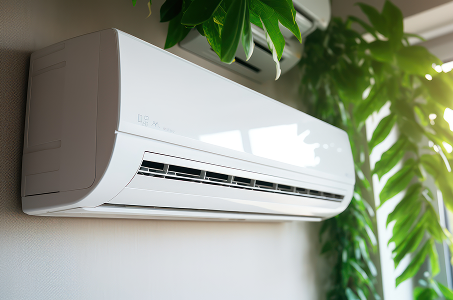
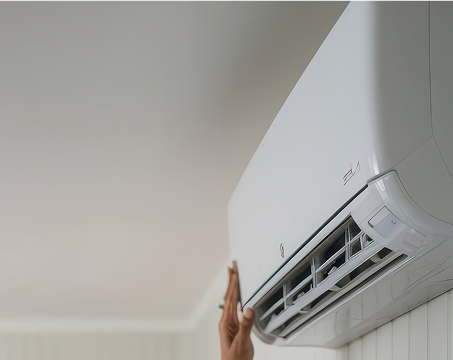
1.1. Split Wall-Mounted Air Conditioners (Non-Inverter / Fixed-Speed)
These systems consist of one indoor unit connected to one outdoor unit and operate at a fixed compressor speed.
- Ideal for bedrooms, lounges, and living areas
- More affordable upfront than inverter models
- Reliable and effective cooling
- The compressor switches on and off, using more electricity
- Requires professional installation
- Some models offer both cooling and heating
1.2. Inverter Air Conditioners
Inverter air conditioners are an advanced version of split wall-mounted units. The compressor automatically adjusts its speed to maintain a stable indoor temperature.
- Highly energy-efficient
- Provides consistent cooling and improved comfort
- Reduces electricity consumption compared to non-inverter units
- Quieter operation
- Higher upfront cost, with lower long-term running costs
- Well suited for family homes with regular daily use
1.3. Multi-Split Air Conditioners
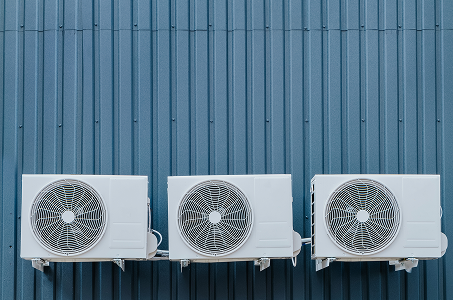
Multi-split systems connect multiple indoor units to a single outdoor unit, allowing different rooms to be cooled independently.
- Ideal for multiple rooms or larger homes
- Saves outdoor space by using one external unit
- Individual temperature control per room
- Higher installation complexity and cost
- Best planned during renovations or new builds
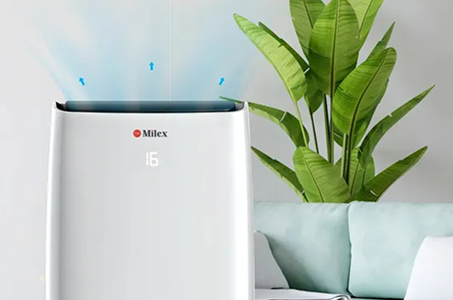
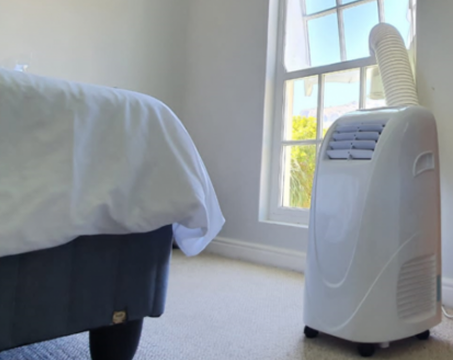
2. Portable Air Conditioners
- Flexible solution for rentals or temporary spaces
- Easy to move between rooms
- Less energy-efficient than fixed units
- Simple installation with a window vent kit
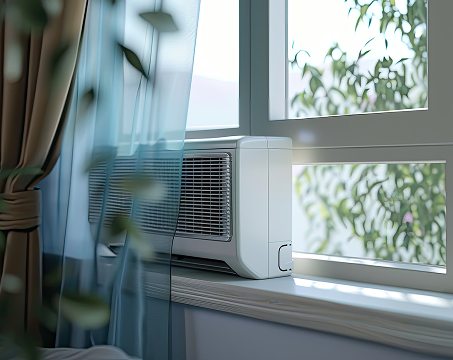
3. Window Air Conditioners
- Suitable for small rooms or apartments
- Affordable and compact
- Can be noisy and block window light
- Installation is straightforward but less flexible
- Not as aesthetically pleasing as the other air conditioner options
| AC Type | Best For | Pros | Cons | Estimated Cost Range |
|---|---|---|---|---|
| Split AC (Non-Inverter) | Single rooms | Lower upfront cost | Higher power usage | R5,000–R12,000 |
| Inverter AC | Family homes | Energy-saving, stable cooling | Higher upfront cost | R7,000–R18,000 |
| Multi-Split AC | Multiple rooms | One outdoor unit, room control | Higher install cost | R19,000–R35,000 |
| Portable AC | Rentals | No installation | Less efficient | R4,000–R8,000 |
| Window AC | Small rooms | Affordable | Noisy | R3,000–R6,000 |
AC Type
Split AC (Non-Inverter)
Best For:
Single rooms
Pros:
Lower upfront cost
Cons:
Higher power usage
Estimated Cost Range:
R5,000–R12,000
AC Type
Inverter AC
Best For:
Family homes
Pros:
Energy-saving, stable cooling
Cons:
Higher upfront cost
Estimated Cost Range:
R7,000–R18,000
AC Type
Multi-Split AC
Best For:
Multiple rooms
Pros:
One outdoor unit, room control
Cons:
Higher install cost
Estimated Cost Range:
R19,000–R35,000
AC Type
Portable AC
Best For:
Rentals
Pros:
No installation
Cons:
Less efficient
Estimated Cost Range:
R4,000–R8,000
AC Type
Window AC
Best For:
Small rooms
Pros:
Affordable
Cons:
Noisy
Estimated Cost Range:
R3,000–R6,000
Choosing the Correct AC Size for Your Room
Why Room Size Matters
An undersized AC won’t cool properly, while an oversized unit can waste energy.
Table: Recommended AC Capacity by Room Size
Based on the South African guideline of ±650 BTU per square metre. A higher BTU unit can cool smaller rooms, for example, a 12,000 BTU air conditioner can comfortably cover rooms that would normally require 7,000 or 9,000 BTU, thus making it a flexible option when extra capacity is needed.
| Room Size (m²) | Calculated Capacity (BTU) | Recommended AC Size |
|---|---|---|
| <18 m² | 8,450–11,700 | 9,000 BTU |
| <25 m² | 12,350–16,250 | 12,000 BTU |
| 26–32 m² | 16,900–20,800 | 18,000 BTU |
| 33–40 m² | 21,450–26,000 | 24,000 BTU |
Room Size (m²)
<12 m²
Calculated Capacity (BTU)
6,500–7,800
Recommended AC Size
7,000 BTU
Room Size (m²)
<18 m²
Calculated Capacity (BTU)
8,450–11,700
Recommended AC Size
9,000 BTU
Room Size (m²)
<25 m²
Calculated Capacity (BTU)
12,350–16,250
Recommended AC Size
12,000 BTU
Room Size (m²)
26–32 m²
Calculated Capacity (BTU)
16,900–20,800
Recommended AC Size
18,000 BTU
Room Size (m²)
33–40 m²
Calculated Capacity (BTU)
21,450–26,000
Recommended AC Size
24,000 BTU
Important considerations:
- Rooms with large windows, direct sunlight, or poor insulation may require a higher BTU rating.
- Ceiling height above 2.6 m should also be factored in.
- Kitchens or rooms with high occupancy generate additional heat load.
Energy Efficiency & Running Costs
- Look for high Energy Efficiency Ratings (EER) - the higher the grade the better
- Inverter technology reduces electricity use
- Efficient ACs save long-term costs
Frequently Asked Questions
-
1. What is the best air conditioner for a family home?
-
2. How do I know what size AC I need?
Measure your room in square metres and match it to the correct BTU rating.
-
3. Are inverter air conditioners worth it?
Yes, they use less electricity and reduce monthly energy bills.
-
4. Which AC is best for children's bedrooms?
Quiet split units with temperature control and sleep mode.
-
5. How much does an air conditioner cost to run?
Costs depend on size, usage, and efficiency—energy-efficient models cost less over time.
Beat the Heat With These Products
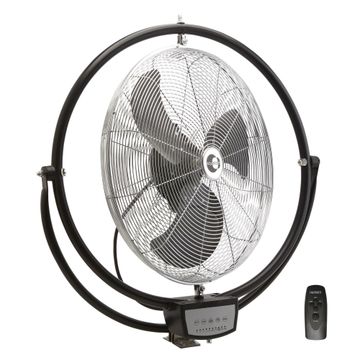
EQUATION Metal Wall Fan Remote Control
Available
For Store Pickup:
55 Available
for Delivery
R 2,945.00
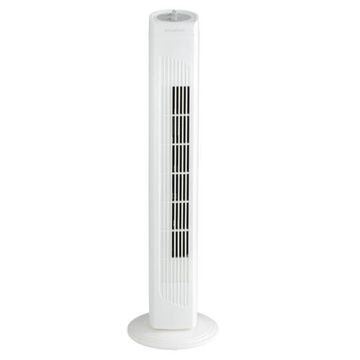
Equation Tower Fan White 81cm 42W
Available
For Store Pickup:
21 Available
for Delivery
R 599.00
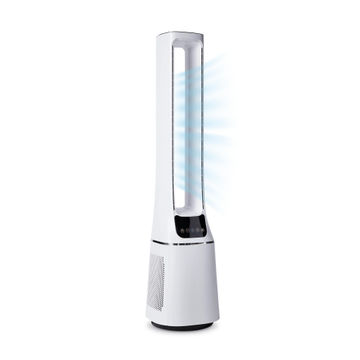
Equation Pure Bladeless Tower Fan & Purifier White 33W
Available
For Store Pickup:
5 Available
for Delivery
R 3,699.00
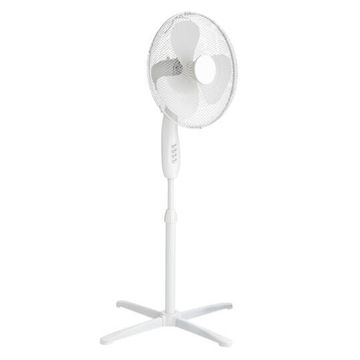
Equation Stand Fan White 40cm 45W
Available
For Store Pickup:
42 Available
for Delivery
R 499.00
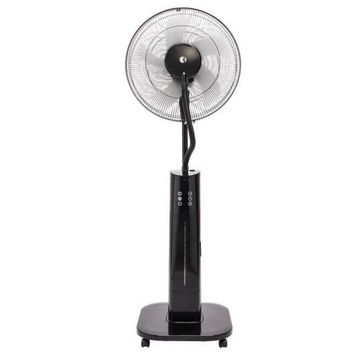
Equation Misting Fan Black 40mm 70W
Available
For Store Pickup:
63 Available
for Delivery
R 2,239.00

Equation 3 in 1 (Wall/Floor/Stand) Industrial Fan 4ocm 45W
Available
For Store Pickup:
17 Available
for Delivery
R 799.00
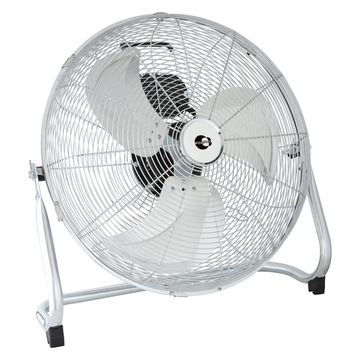
Equation Floor Fan Chrome 45cm 120W
Available
For Store Pickup:
14 Available
for Delivery
R 1,199.00

Equation Desk Fan Black 30cm 40W
Available
For Store Pickup:
73 Available
for Delivery
R 549.00
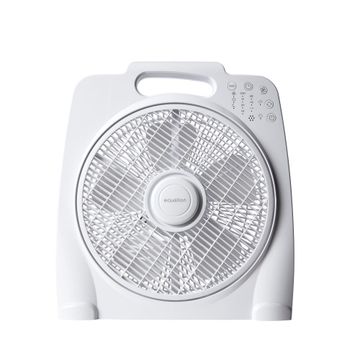
Equation Box Fan White With Remote 30cm
Available
For Store Pickup:
34 Available
for Delivery
R 799.00
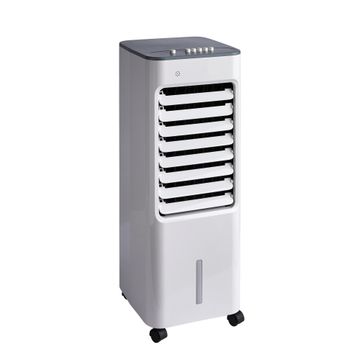
Equation Manual Air Cooler 5L 50W
Available
For Store Pickup:
27 Available
for Delivery
R 1,699.00
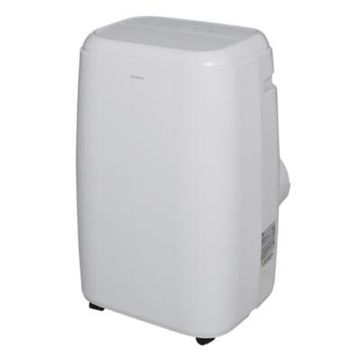
Equation 12000BTU Mobile Airconditioner
Available
For Store Pickup:
37 Available
for Delivery
R 6,499.00
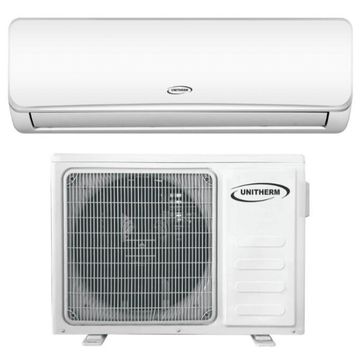
Unitherm Midwall Airconditioner 12000BTU Inverter
Available
For Store Pickup:
139 Available
for Delivery
R 5,999.00
Was
R 6,499.00
SAVE
R 500.00